
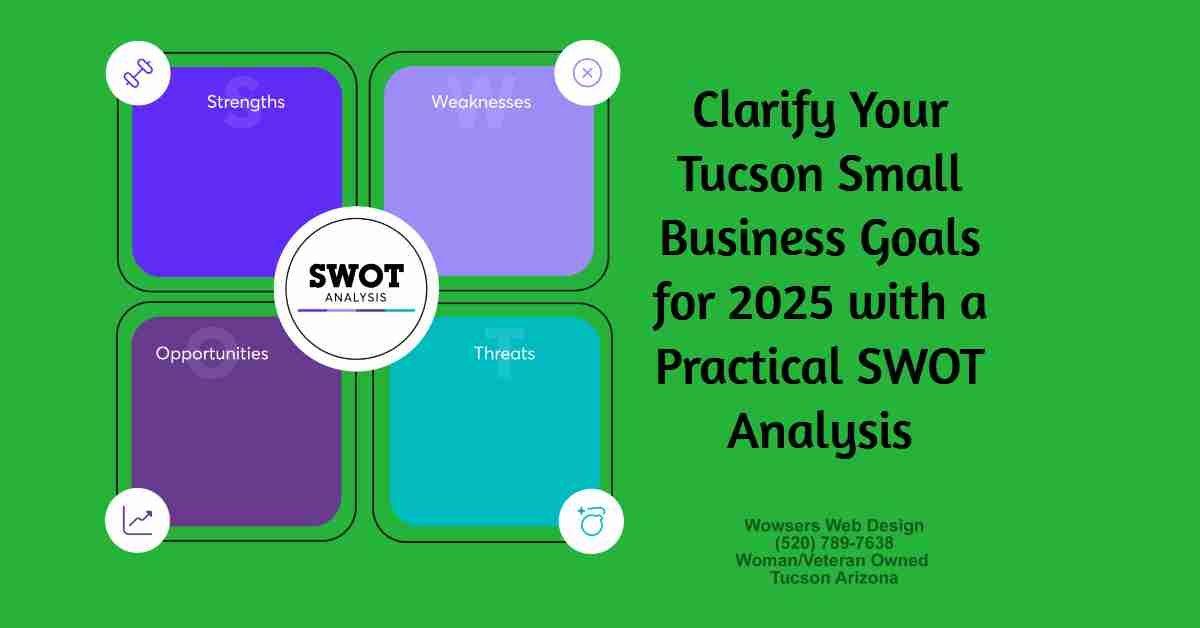
Running a small business in Tucson can be challenging, but having clear goals makes a big difference. With 2025 just around the corner, now's the perfect time to evaluate where you're headed. A SWOT analysis—assessing strengths, weaknesses, opportunities, and threats—gives you a clear picture of what’s working and what needs focus. It’s a simple yet powerful way to align decisions with your goals and set your business up for success.
Understanding SWOT Analysis
To confidently navigate your Tucson small business toward success in 2025, understanding how to perform a SWOT analysis is essential. It’s a practical tool that allows you to identify areas of advantage, pinpoint challenges, and prepare for future opportunities. Let's break it down clearly.
Definition of SWOT Analysis
SWOT stands for Strengths, Weaknesses, Opportunities, and Threats. It's a strategic tool that helps businesses assess their current position and formulate a plan of action. Whether you're planning next year's goals or tweaking your broader strategy, SWOT analysis is a straightforward way to gain insights.
It's not just about identifying strengths or weaknesses; it's about creating a roadmap that aligns your internal capabilities with external realities. By taking the time to conduct a SWOT analysis, you're setting the foundation for informed, confident decision-making that fits your unique business. For more details, check out this guide on SWOT analysis from BDC.
Components of SWOT
The backbone of any SWOT analysis lies in breaking down its four components. Here's what each section covers:
Strengths
These are the qualities that give your business an advantage over competitors. Consider areas like customer loyalty, unique products, or strong brand reputation. Think about what you do best and how you can capitalize on it.
Ask yourself:
- What makes us stand out in the Tucson market?
- Do we have unique skills or resources others lack?
Weaknesses
No business is perfect, and acknowledging weaknesses is critical. Internal challenges, such as limited resources, outdated technology, or operational inefficiencies, fit here. Recognizing them is the first step to improvement.
Questions to consider:
- Are our processes costing us time or money?
- Where are we falling short compared to competitors?
Opportunities
This section focuses on external factors that could benefit your business. They might include market trends, technological advancements, or even changes in customer behavior in Tucson. Opportunities often serve as the driving force for growth.
Reflect on:
- What trends could we take advantage of in 2025?
- Are there unmet needs we can fulfill?
Threats
Lastly, threats are external risks that might hinder your progress. Factors like rising competition, economic downturns, or regulatory changes are common examples. Preparing for these challenges helps you avoid surprises.
Think about:
- What risks could harm our business next year?
- Are competitors gaining market share we could lose?
If you're looking for additional tips on examining these four areas effectively, check out this resource detailing the elements of SWOT analysis.
Understanding these components and weaving them into your Tucson small business strategy sets you up for practical, actionable insights that matter. Use this process to create a transparent view of where you stand today and where you aim to go.
Setting Clear Business Goals
Every successful business starts with a clear vision, but the magic happens when that vision is broken down into actionable goals. For Tucson small business owners, setting measurable and achievable goals for 2025 is a critical step in navigating challenges and seizing opportunities. Let’s explore why goal-setting matters and how you can apply the SMART framework to refine your targets.
Why Goals Matter for Small Businesses
Have you ever tried driving to an unfamiliar location without a map? It’s frustrating, time-consuming, and often leaves you lost. That’s exactly what running a business without clear goals feels like. Goals act as the map that guides you, ensuring every effort brings you closer to your desired outcomes.
Well-defined goals improve business focus, channeling your resources and energy into what truly matters. For small businesses, where resources are often tight, this focus can mean the difference between growth and stagnancy.
Here’s how setting goals positively impacts your business:
- Enhanced Team Alignment: Clear goals unite your team, ensuring everyone works toward the same outcome.
- Better Decision-Making: Goals help you prioritize tasks and allocate resources effectively.
- Trackable Progress: Measuring results gives you the data to evaluate what’s working—and what’s not.
Need more insights on why business goals are crucial? Check out this resource on the importance of setting clear business goals.
SMART Goals Framework
The SMART goals framework is a tried-and-true method for turning aspirations into actionable, measurable results. SMART stands for Specific, Measurable, Achievable, Relevant, and Time-bound. Let’s break each element down to see how it applies in the context of your business objectives.
- Specific: Make sure your goal is clear and precise. Instead of saying, “Increase sales,” aim for “Increase revenue by 20% in Q1 2025.”
- Measurable: Attach numbers or data to track your progress. For instance, track monthly customer growth or leads generated.
- Achievable: Set goals that stretch your capabilities but remain realistic. Aiming to double revenue in a month? Probably unrealistic.
- Relevant: Align your goals with your business’s mission and priorities. Tucson businesses might focus on local market expansion or customer retention.
- Time-bound: Assign deadlines to create urgency. A goal with an open-ended timeline risks becoming an afterthought.
Using SMART criteria ensures goals are actionable and keeps every plan rooted in reality. Want to dive deeper? This step-by-step guide on writing SMART goals might help refine your planning process.
By combining clear objectives with a proven framework, Tucson small business owners can confidently carve a path toward sustainable growth in 2025.
Conducting a SWOT Analysis for Tucson Small Businesses
Understanding how to conduct a SWOT analysis can transform your small business strategy. It’s more than just a checklist—it’s a dynamic framework that mirrors your business's health, potential, and risks. For Tucson small businesses, incorporating local market insights makes the process even more impactful. Let's break it down.
Identifying Strengths
Strengths are internal attributes that give your business an edge. Tucson's small businesses often excel in areas like fostering customer loyalty and tapping into niche markets. Why? Tucson is a community-driven city, and local pride plays a huge role in business success.
Here are common strengths you might identify:
- Customer Loyalty: Loyal customers are your ambassadors. Many local Tucson businesses benefit from word-of-mouth referrals.
- Authenticity: Businesses offering authentic Southern Arizona experiences, whether through food, crafts, or services, stand out.
- Unique Value Propositions: Niche markets like eco-friendly products or local artisan goods thrive here.
Ask yourself: “What do we do better than anyone else in the Tucson area?”
For more on leveraging local strengths, check out this Tucson business resource on assessing strengths.
Recognizing Weaknesses
Acknowledging weaknesses is just as critical as celebrating strengths. Tucson small businesses often face challenges like limited resources or low brand visibility in competitive neighborhoods.
Common weaknesses include:
- Limited Budgets: Without large financial backing, expanding or investing in marketing can be tough.
- Inconsistent Foot Traffic: Some areas of Tucson see seasonal dips in customer volume, impacting revenue.
- Brand Awareness: In a city with established competitors, standing out takes time.
Think: “What’s holding us back, and how can we fix it?”
Weaknesses aren’t failures; they’re opportunities to improve. Learn more from this small business SWOT analysis guide.
Exploring Opportunities
Opportunities often lie in external factors like market trends or new developments. Tucson is growing, both economically and culturally, which creates exciting possibilities.
Here’s what to watch in 2025:
- Tourism Growth: Tucson's desert beauty and cultural richness continue to attract visitors. Collaborating with the tourism industry could be lucrative.
- Sustainability Trends: Eco-consciousness is rising. Businesses prioritizing sustainability can capture this growing market.
- Tech Initiatives: Programs supporting innovation in tech, such as co-working spaces, may present opportunities for entrepreneurs.
Ask yourself: “What trends or new developments can we align with?” Explore insights from this Bank of America guide on finding opportunities.
Assessing Threats
Threats are external risks that might undermine your goals. Tucson small businesses face unique challenges, from economic downturns to rising competition.
Potential threats in our market include:
- Large Competitors: Big-box stores and chains often lure customers with convenience and lower prices.
- Economic Shifts: Changes in household income or employment levels may reduce local spending.
- Regulations: Compliance with new laws—from zoning to environmental standards—can affect operations.
Be proactive and ask: “Where are we vulnerable, and how can we prepare?”
For actionable steps to mitigate threats, visit this resource dedicated to SWOT analysis strategies.
By taking the time to thoroughly assess these four categories, Tucson business owners can create a realistic, actionable plan that addresses both internal and external factors. Use this blueprint to clarify your business goals for 2025.
Developing Goals from the SWOT Analysis
A SWOT analysis reveals key insights about your business, but its real power lies in what you do with that information. By turning strengths, weaknesses, opportunities, and threats into actionable goals, Tucson business owners can target growth, minimize risks, and prepare for success in 2025. Let’s explore how you can use this framework to translate insights into tangible results.
Linking Strengths to Goals
Capitalizing on what your business does well is essential to thriving in today’s competitive market. Start by identifying specific ways your strengths can align with your goals.
For example:
- Strong Customer Loyalty: Launch a referral program to encourage existing customers to bring in new ones.
- Unique Products or Services: Expand your offerings to highlight what makes you different.
- Efficient Operations: Set goals to scale operations while maintaining efficiency.
Focus on maximizing areas where your business already excels. By setting objectives rooted in your strengths, you’re ensuring efforts will yield high returns. Explore goal-setting approaches tied to business strengths for further actionable ideas.
Mitigating Weaknesses Through Goal Setting
Acknowledging weaknesses doesn’t mean stopping progress—it’s about turning challenges into opportunities for improvement. Start by setting clear, actionable goals that tackle gaps in your operations or performance.
Here’s how:
- If brand visibility is weak, establish a marketing goal, such as increasing social media engagement by 30% in six months.
- Struggling with outdated technology? Prioritize upgrading systems with a specific implementation timeline.
- Facing staff shortages? Aim to improve employee retention or set staffing targets to reduce strain.
This structured approach ensures continuous improvement without overwhelming yourself or your team. Dive deeper into addressing weaknesses for better goal alignment.
Capitalizing on Opportunities
Opportunities identified in a SWOT analysis are untapped potential waiting for action. They’re your chance to grow and innovate. Set goals that align with the trends or changes benefitting your business.
Here’s a framework to get started:
- Identify Emerging Trends: If eco-consciousness is growing, adopt sustainable practices and market them effectively.
- Explore Market Demands: If there’s a demand for local experiences in Tucson, set goals to collaborate with community events.
- Engage with Technology: Goal: Launch an online store or optimize your digital presence by the first quarter.
Opportunities are windows of growth. Look at recent guides on seizing external business opportunities for achievable strategies.
Preparing for Threats
Every business faces threats, but the key is having a plan to shield your company. Set defensive goals that minimize the impact of external risks.
Consider these examples:
- Competition: Focus on customer retention by delivering exceptional service and loyalty perks.
- Economic Uncertainty: Build a financial buffer by cutting non-essential costs and improving cash flow.
- Regulatory Changes: Stay proactive by assembling a compliance team or consulting legal advisors to stay ahead.
When crafting these goals, think of them as insurance policies for your business. You’re not being reactive; you’re being prepared. For more strategies, check out how businesses use SWOT analysis for strategic planning.
By turning SWOT analysis insights into practical goals, Tucson businesses can move forward with intent and confidence for a successful 2025.
Measuring Success of Your Goals
Establishing clear goals is just the first step for Tucson small business owners. To ensure you’re on the right track, tracking measurable indicators and staying flexible as circumstances shift is crucial. Let’s dive into how small businesses can measure their success and make adjustments to stay on course.
Key Performance Indicators (KPIs)
Key Performance Indicators (KPIs) are the metrics that help gauge whether your business is achieving its goals. For small businesses in Tucson, choosing the right KPIs allows for targeted improvements and informed decision-making.
Some essential KPIs to consider include:
- Revenue Growth: Tracks your increase in earnings over a set period.
- Customer Retention Rate: Measures how well you keep existing customers loyal.
- Gross Profit Margin: Assess how much profit you’re making after covering costs.
- Conversion Rates: Shows the percentage of leads that turn into paying customers.
- Operating Efficiency: Helps you understand if resources are being used effectively.
For Tucson businesses, factors like seasonal customer flow or local spending trends may influence which KPIs matter most. Choose metrics that align with your strategic priorities, whether it’s maximizing tourism or retaining local clientele. If you’d like more details, this list of small business metrics offers additional inspiration.
Reviewing and Adjusting Goals
Setting goals isn’t a one-and-done task; circumstances evolve, markets shift, and unexpected challenges arise. Regular reviews keep your targets relevant as your Tucson business grows and adapts.
Here’s how to keep your goals dynamic:
- Schedule Regular Check-ins: Assess progress monthly or quarterly to ensure alignment with your overarching strategy.
- Evaluate Metrics: Analyze KPIs and determine whether you’re meeting milestones or falling short.
- Identify What’s Working: Focus efforts on strategies that yield the most significant results.
- Adapt to Changes: Stay flexible if market trends, customer needs, or economic conditions shift.
For example, if Tucson’s tourism market booms in 2025 but your numbers lag, it’s time to revisit your marketing and outreach strategies. On the flip side, if your goals are consistently exceeded, consider raising the bar to sustain growth. Learn more about effective goal adjustments in this helpful guide.
Staying proactive in measuring success and revising when necessary ensures you’re not just setting goals but actively achieving them.
Conclusion
Clarifying your business goals with a SWOT analysis is a smart move for 2025. It helps you focus on strengths, address weaknesses, seize opportunities, and prepare for challenges. Tucson's unique market offers plenty of possibilities, but success starts with a clear plan.
Ready to set your business up for growth? Start your SWOT analysis today. Break down the details, turn insights into clear goals, and start building a road map to achieve them. Take action now and make 2025 your best year yet.
About Wowsers Web Design
Wowsers Web Design is a Veteran/Woman owned, Tucson Web Design Company. As a Tucson Website Designer, we offer Affordable WordPress websites for small and home-based businesses in Tucson AZ and across the United States. Check out our affordable WordPress Web Design Packages.
Give us a call today (520) 789-7638 or Send us an email if you have questions.
Please visit our Link Tree Page.